A clean dryer vent doesn’t just help clothes dry faster; it keeps the entire system running efficiently. When lint and debris build up, air can’t move freely, forcing the dryer to work harder. Clean vents allow full airflow, which improves load capacity and shortens drying time.
We often overlook the vent because it’s out of sight, but it directly affects drying efficiency and energy use. A clogged vent can make large loads take longer, costing more in electricity and wear on the machine. Keeping the vent clear helps us save time and extend our dryer’s lifespan.
Proper vent maintenance also improves safety and air quality in the home. By understanding how clean vents impact speed, capacity, and overall performance, we can keep our dryers working at their best for years.
How Dryer Vent Cleaning Impacts Load Capacity and Drying Speed
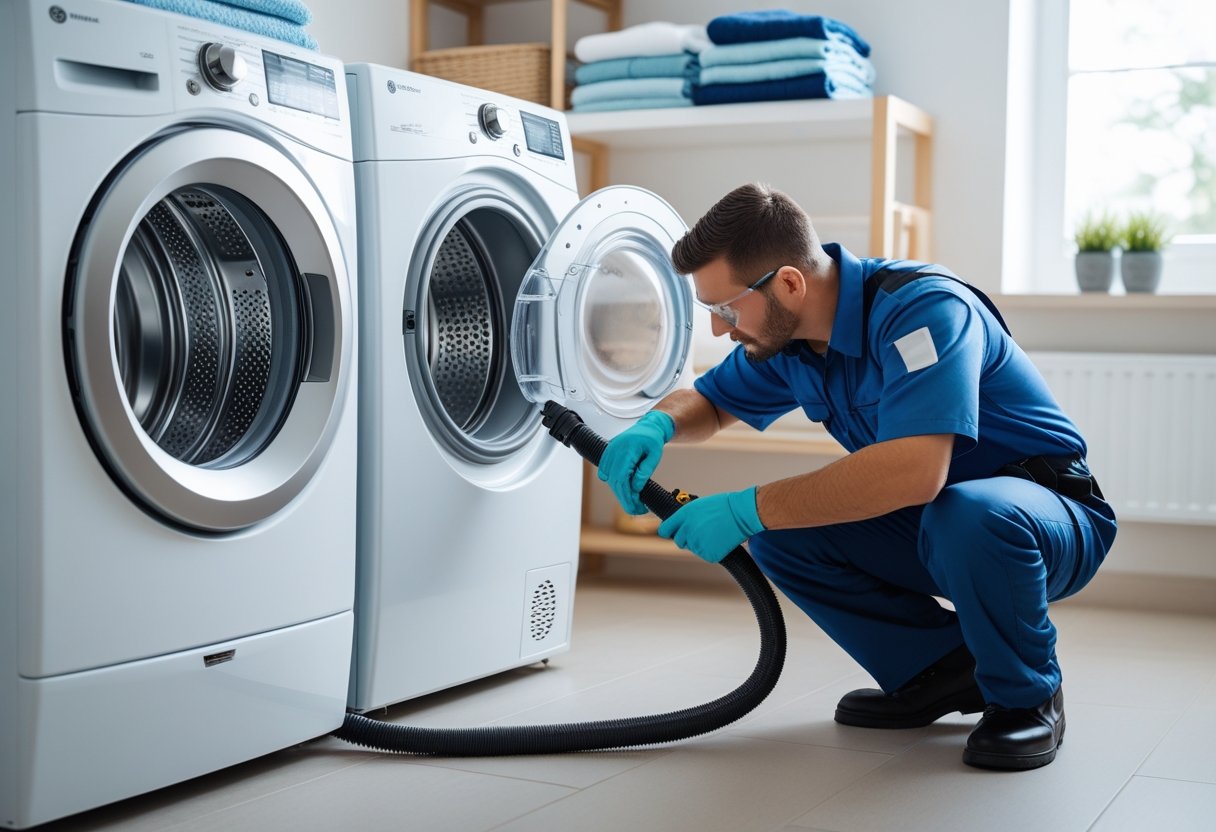
Clean dryer vents allow steady airflow, prevent heat buildup, and support efficient moisture removal. When lint and debris restrict the vent, drying time increases, and the machine struggles to handle full loads effectively.
The Role of Dryer Vents in Moisture Removal
Dryer vents move warm, damp air out of the machine while drawing in dry air to continue evaporation. When this airflow works properly, clothes dry evenly and in less time. A clean vent allows the dryer to keep a consistent temperature and humidity balance inside the drum.
If we let lint buildup or small blockages form, the moisture remains trapped longer. This forces the dryer to run multiple cycles, wasting time and energy. Proper vent cleaning keeps the air path open, allowing moisture-laden air to escape quickly.
Regularly cleaning the lint trap also supports this process. Though the lint trap catches most fibers, some lint escapes into the vent. By clearing both areas, we maintain airflow efficiency and shorten drying cycles without overworking the appliance.
How Clogged Vents Affect Drying Cycles
Clogged dryer vents limit air movement and reduce the system’s ability to carry moisture away. As air circulation drops, the dryer drum stays humid, causing clothes to feel damp even after a full cycle.
Common signs of a clogged vent include:
- Extended drying times
- Hotter-than-normal dryer surfaces
- Excess lint behind or under the appliance
When airflow drops, the dryer’s heating element works harder and longer. This increases energy consumption and shortens component life. By removing blockages and lint buildup, we keep the system running efficiently and restore normal drying performance.
Cleaning the dryer vent also supports temperature control. Excess heat from trapped air can trigger safety shutoffs or damage fabrics. Keeping the vent clear helps regulate internal conditions and ensures even drying for each load.
Airflow and Its Influence on Load Size
Dryer vents directly affect how much laundry the machine can dry effectively in one cycle. When airflow is clear, the dryer can handle larger loads because moisture exits the drum quickly.
As vents clog, restricted airflow keeps moisture inside longer, limiting load capacity. That means smaller batches must dry separately to avoid extended cycles. A clean vent helps maintain steady airflow rates that support normal or even full-capacity loads.
We can track performance by checking drying times after cleaning. If drying becomes faster and more consistent, airflow has improved. Regular cleaning not only saves time per cycle but also helps us fully use the dryer’s design capacity without stressing the motor or heating element.
Drying Efficiency, Energy Savings, and Appliance Lifespan
Clean vents improve air movement, lower energy waste, and keep dryers running at their best. By keeping lint buildup under control, we help our dryers dry loads faster, use less power, and last longer with fewer repairs.
Improved Drying Efficiency Through Clean Vents
When vents stay clear of excessive lint, air can move freely from the dryer drum to the outside exhaust. This steady airflow lets moisture escape more quickly, which shortens cycle times and improves drying efficiency. A clogged vent forces the dryer to push harder, often leading to uneven results or damp clothes after a full cycle.
We can measure these changes through dry time, airflow rate, and temperature consistency. Clean vents help maintain steady heat levels and balanced air pressure. These conditions reduce drying time by up to several minutes per load, depending on vent length and lint buildup.
Regular duct cleaning also supports consistent dryer performance. Less restriction means fewer overheating cycles and reduced strain on heating elements. Over time, this consistent operation helps keep clothes from being over-dried, protecting their texture and color.
| Factor | With Clean Vent | With Clogged Vent |
|---|---|---|
| Airflow | Strong and stable | Weak and restricted |
| Drying Time | Shorter | Longer |
| Heat Levels | Consistent | Irregular |
| Efficiency | Higher | Lower |
Energy Savings and Reduced Utility Bills
Clean vents not only boost airflow but also cut energy use. When air moves freely, the dryer doesn’t need to run extra cycles or use as much heat to finish a load. That translates into lower power or gas consumption and smaller energy bills each month.
Each cycle that runs longer than necessary wastes both energy and money. Over a year, these small inefficiencies can add up. By keeping vents clear, we reduce drying times and ensure every watt or BTU contributes directly to moisture removal instead of fighting trapped lint.
Many utility companies report that dryers with blocked vents can use 20-30% more energy. Proper dryer maintenance through regular duct cleaning minimizes this waste, keeping operating costs steady while supporting more sustainable household energy use.
Extending Dryer Lifespan Through Proper Maintenance
A well-maintained dryer faces less wear and tear. When vents stay clean, motors, belts, and heating components operate under normal loads instead of constant stress. Overheating and airflow blockages are leading causes of early dryer failure.
Regular lint removal and vent checks prevent parts from overworking. Consistent maintenance also helps us spot issues such as worn seals or weak airflow before they become expensive repairs. Clean ducts reduce heat buildup inside the system, which protects internal wiring and electronic sensors from damage.
By following a routine cleaning schedule; at least once a year for most homes; we can lengthen the dryer lifespan by several years. This approach cuts replacement costs and keeps performance steady, turning basic vent and duct cleaning into a low-cost, high-value form of preventive care.
Safety, Air Quality, and Additional Benefits of Clean Dryer Vents
A clean dryer vent reduces the risk of overheating, supports better indoor air quality, and helps extend the life of both laundry and equipment. By removing lint, dust, and other buildup, we can lower energy waste and improve household safety.
Reducing Fire Hazards and Overheating
Lint is highly flammable. When it collects inside vents, it restricts airflow and causes heat to build up, increasing the chance of dryer fires. A clean dryer vent allows air to move freely, keeping the system cooler and the heating element from working harder than necessary.
We can use a short checklist to track safe operation:
| Maintenance Task | Frequency | Reason |
|---|---|---|
| Clean lint trap | Every load | Prevent airflow blockages |
| Inspect vent opening | Monthly | Remove lint or debris |
| Professional vent cleaning | Once a year | Reduce fire hazards |
Regularly cleaning dryer vents keeps the motor and heating components within safe temperature limits. It also prevents the appliance from shutting off mid-cycle due to overheating. Homeowners can avoid costly repairs by maintaining steady airflow and consistent drying temperatures.
Maintaining Indoor Air Quality
When dryer vents clog, moist air, dust, and lint may leak indoors. This can raise humidity and lead to mold or mildew around laundry areas. Over time, it affects indoor air quality, especially for those with asthma or allergies.
By cleaning dryer vent systems, we help remove trapped particles that might otherwise circulate through the home. The vent can then expel warm, moist air outside where it belongs, keeping walls and floors dry.
Poor ventilation may also cause burning smells or damp odors. These signs often show that airflow is limited and lint buildup has begun. Staying alert to them helps us act before the problem escalates into structural damage or health concerns.
Protecting Clothing and Household Items
Excess lint and restricted airflow force dryers to run longer, which can overheat fabrics and damage fibers. Clothing may come out rougher, with colors fading faster. A clean dryer vent helps keep drying times steady and heat levels balanced, protecting clothes from unnecessary wear.
We also save energy. Efficient airflow means the dryer uses less electricity or gas, lowering both costs and strain on the unit. Shorter drying cycles also help preserve bedding, towels, and other household items that break down under high heat.
Simple care steps-like cleaning dryer vents regularly and checking for exhaust blockages-help us maintain fabric quality and reduce premature aging of materials. Proper maintenance keeps both our laundry and our appliance performing well.
Best Practices for Effective Dryer Vent Maintenance
We can keep our dryers running safely and efficiently by checking airflow, removing lint buildup, and staying on a steady maintenance schedule. Regular care reduces fire hazards, shortens drying time, and helps the appliance handle larger loads without overheating.
Identifying Signs Your Dryer Vent Needs Cleaning
We should watch for early signs that the dryer vent needs cleaning to prevent performance issues or safety risks. Longer drying times are one of the easiest signs to spot. If clothes remain damp after a full cycle, airflow is likely blocked.
A burning smell, excessive heat on the dryer surface, or lint building up around the vent hood also point to blockage. When the vent flap outside doesn’t open fully during operation, lint or debris may be restricting airflow.
We can inspect behind the dryer for crushed or kinked ducts. A noticeable layer of lint near the wall connection means airflow resistance. A simple flashlight check can reveal hidden buildup. Catching these signs early saves energy and lessens wear on the heating element.
DIY vs. Professional Dryer Vent Cleaning Service
We can handle small maintenance tasks, but full dryer vent cleaning often calls for a professional dryer vent cleaning service. DIY cleaning works best when the duct is short, straight, and easy to access. A home vacuum or vent brush can remove loose lint near the opening.
However, professional dryer vent cleaning reaches deep into longer duct systems. Technicians use specialized tools to remove compacted lint, rodent nests, or moisture buildup that we cannot reach. They also check for leaks, gaps, and disconnections that affect performance.
Below is a brief comparison:
| Aspect | DIY Cleaning | Professional Service |
|---|---|---|
| Cost | Low | Moderate |
| Tools Needed | Brush, vacuum | Power brush, inspection camera |
| Effectiveness | Partial | Thorough |
| Safety Check | Limited | Included |
Hiring a dryer vent cleaning service once a year provides peace of mind and long-term efficiency.
Routine Dryer Vent Cleaning Schedules
The best cleaning schedule depends on how much we use the dryer and the vent’s length and design. For most households, dryers need vent cleaning every 12 months. Homes with large families, pets, or high laundry use may need it every six months.
We should also clean the lint trap after each load. It’s a simple habit that reduces buildup in the duct. Checking the exterior vent cover every few months keeps birds or debris from blocking airflow.
Keeping a written or digital log helps us stay consistent. We can note the date of each cleaning, any service visits, and observed signs of lint buildup. This simple record helps track performance and avoid missed appointments for professional dryer vent maintenance.