Energy costs matter, and ductless mini-split units often stand out for efficiency. We look at how their ratings show real savings and steady comfort, so choices feel clear and practical.
Energy efficiency ratings tell us how much heating and cooling we get for the power we use, and higher SEER, EER, and HSPF numbers mean lower energy use over time. These ratings give a fast way to compare models and spot long-term value.
We explain what each rating means, how mini-splits reach high efficiency, and how they stack up against central air and other systems. We also cover features and smart tools that boost savings and help us choose the right unit for our space.
Understanding Energy Efficiency Ratings in Ductless Mini-Split Units
Energy efficiency ratings show how well a ductless mini-split uses power for heating and cooling. We focus on the main ratings, why they matter for daily use, and how testing turns performance into clear numbers.
What Are Energy Efficiency Ratings?
Energy efficiency ratings measure how much heating or cooling we get for the electricity we use. Higher ratings mean less energy use for the same comfort.
Common ratings include SEER, SEER2, EER, HSPF, and HSPF2. Each one applies to a different season or test condition.
| Rating | Full Name | Used For |
|---|---|---|
| SEER / SEER2 | Seasonal Energy Efficiency Ratio | Cooling over a season |
| EER | Energy Efficiency Ratio | Cooling at steady conditions |
| HSPF / HSPF2 | Heating Seasonal Performance Factor | Heating over a season |
SEER2 and HSPF2 use updated testing rules. These reflect real-world use better than older ratings.
Importance of Energy Efficiency in Mini-Split Systems
Energy efficiency affects our monthly bills and long-term costs. A higher SEER rating or SEER2 rating usually lowers cooling costs during warm months.
In colder regions, HSPF and HSPF2 matter more. Higher heating ratings mean the unit delivers more heat per unit of electricity.
Efficient mini-splits also place less demand on electrical systems. This can help in homes with limited panel capacity. Many utilities and local programs use these ratings to set rebates or incentives. Checking ratings helps us compare models on facts, not claims.
How Energy Efficiency Ratings Are Calculated
Testing labs calculate ratings using set procedures. For cooling, SEER and SEER2 average performance across a range of outdoor temperatures.
EER ratings measure efficiency at one fixed condition. This helps us compare performance during peak heat.
For heating, HSPF and HSPF2 track output over a heating season. They include standby power and defrost cycles.
Key inputs include:
- Electrical energy used
- Heating or cooling output
- Test temperatures and airflow
SEER2 and HSPF2 use stricter airflow settings. These changes often lower numbers but improve accuracy.
Key Performance Metrics: SEER, EER, and HSPF Explained
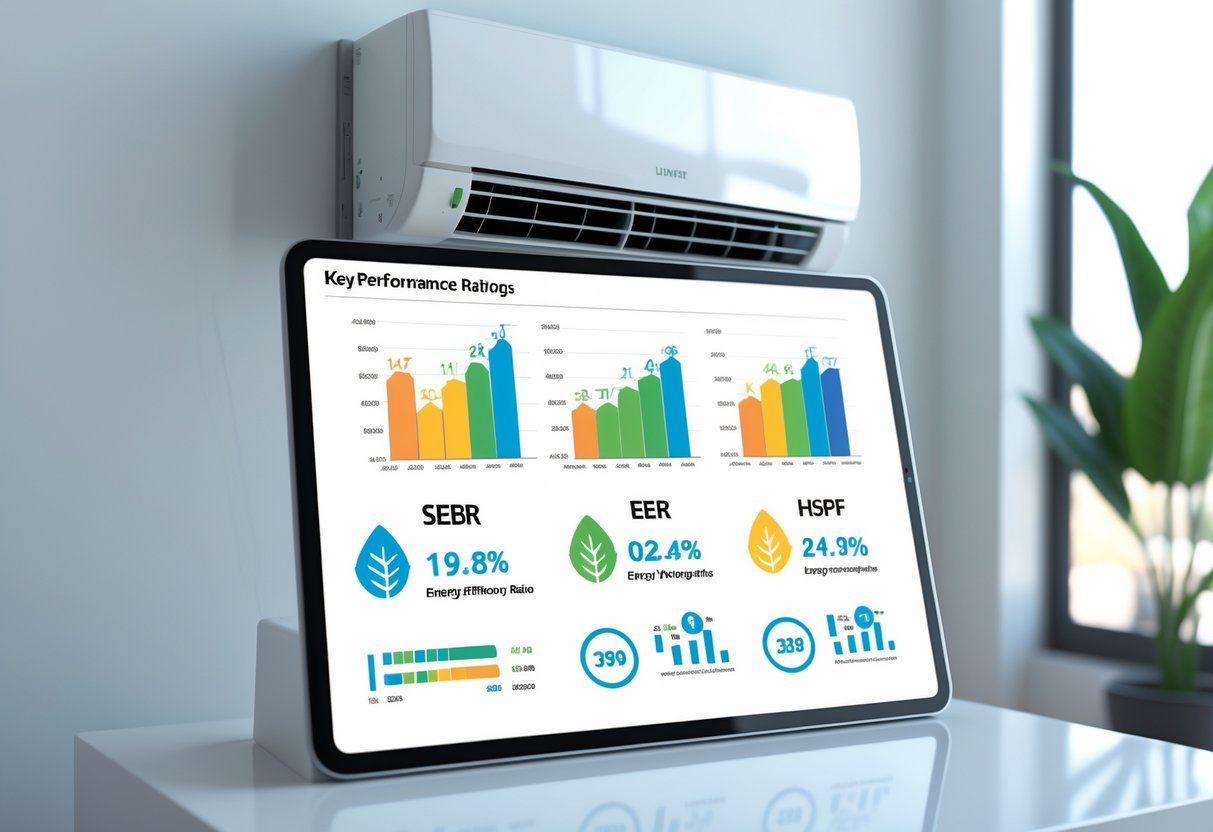
We use three main ratings to judge how efficient a ductless mini-split is. Each metric measures energy use in a different way and climate condition.
SEER and SEER2: Seasonal Cooling Efficiency
SEER, or Seasonal Energy Efficiency Ratio, measures cooling efficiency across a full cooling season. A higher SEER rating means the unit uses less power to produce the same cooling. Most modern mini-splits rate between 16 and 30 SEER.
SEER2 updates the test rules to better match real-world use. The SEER2 rating often looks lower than SEER, but it reflects stricter testing. We should compare SEER2 only with SEER2, not older SEER values.
Key points to know:
- SEER and SEER2 apply to cooling only
- Higher numbers mean better efficiency
- SEER2 gives a more realistic result
| Metric | What it Measures | Test Style |
|---|---|---|
| SEER | Seasonal cooling | Older method |
| SEER2 | Seasonal cooling | Updated method |
EER: Energy Efficiency Ratio at Peak Load
EER, or Energy Efficiency Ratio, measures cooling efficiency at a single moment. The test uses a fixed outdoor temperature, usually 95°F. This makes the EER rating useful in very hot climates.
Unlike SEER, EER does not average results across a season. It shows how the unit performs under stress. We often look at EER when peak power demand matters.
EER helps answer a simple question: how well does the system cool on the hottest days? A higher EER means better performance during extreme heat, even if the SEER looks similar.
HSPF and HSPF2: Heating Seasonal Performance
HSPF, or Heating Seasonal Performance Factor, measures heating efficiency over a season. A higher HSPF rating means the unit produces more heat per unit of electricity. This matters most in mild to cold regions.
HSPF2 updates the test rules, like SEER2 does for cooling. The HSPF2 value often appears lower, but it reflects tougher testing and colder conditions.
We use HSPF and HSPF2 to compare heating costs between models. These ratings help us judge how well a mini-split replaces electric resistance heat or older heat pumps.
How Ductless Mini-Split Units Achieve Superior Energy Efficiency
Ductless mini-split systems reduce waste by design. They move heat with fewer losses and adjust output to match real demand. These features raise efficiency across cooling and heating.
System Components: Indoor and Outdoor Units
A mini split system uses an indoor unit and an outdoor unit linked by refrigerant lines in a line set. The ductless design avoids energy loss from leaky ducts, which helps a ductless mini split system use less power.
The indoor unit delivers air directly to the room. This direct delivery improves comfort and cuts run time for a mini-split air conditioner or ductless heat pump.
Key parts and roles:
- Indoor unit: Conditions air in the space and senses room temperature.
- Outdoor unit: Releases or absorbs heat and houses the compressor.
- Line set: Carries refrigerant with minimal loss.
Because each zone has its own indoor unit, mini splits avoid overcooling or overheating. This zoning improves control and reduces wasted energy in a ductless ac or ductless air conditioner.
Inverter Technology and Variable Speed Compressors
Inverter technology drives much of the efficiency in mini splits. An inverter compressor changes speed instead of turning on and off. This steady operation saves energy and keeps temperatures stable.
Traditional systems cycle at full power. A ductless mini-split with inverter technology ramps output up or down based on demand. This approach lowers peak power use and reduces wear.
Benefits we see with variable speed control:
- Lower energy use: The system runs at the level needed.
- Stable comfort: Fewer temperature swings.
- Quieter operation: Slower speeds reduce noise.
These features apply across mini split ac units, ductless mini split systems, and ductless heat pumps. The result is efficient performance in both cooling and heating without complex controls.
Comparing Efficiency: Ductless Mini-Splits vs Central Air and Other Systems
Ductless mini-splits often deliver higher efficiency ratings than many common cooling systems. We see the biggest differences when we compare seasonal performance, energy savings, and how each system handles zone cooling.
Efficiency Comparison with Central Air Conditioning
Ductless mini-splits usually post higher SEER and HSPF ratings than central air conditioning. Many mini-splits reach SEER ratings above 20, while central air often falls between 14 and 18. Higher ratings mean less energy used over the season.
| System Type | Typical SEER Range | Key Efficiency Factor |
|---|---|---|
| Ductless mini-split | 18-30 | No duct losses |
| Central air | 14-18 | Duct losses reduce output |
Central air systems lose energy through ducts, especially in older homes. Mini-splits avoid this problem by sending air directly into the room. We also gain zoning benefits. With zoned cooling, we cool only the rooms in use, which supports steady energy savings.
Advantages Over Window and Portable Units
Ductless mini-splits outperform window and portable units in both efficiency and comfort. Window units often have SEER ratings below 15, and portable units rank even lower. These systems also leak air and struggle with seasonal performance.
Mini-splits use inverter-driven compressors that adjust speed as needed. This design cuts power use during mild days. We also gain true zoning. Each indoor unit controls its own space, unlike window units that cool a single area poorly.
Portable units pull air from the room and vent it outside. That process lowers efficiency and raises energy use. Mini-splits avoid this issue and deliver consistent zone cooling without added strain on the system.
Choosing the Right Ductless Mini-Split for Maximum Energy Savings
We focus on sizing, system layout, brand efficiency, and key features. These choices affect energy use, comfort, and long-term cost.
Sizing: BTU and Room Matching
Correct BTU sizing drives efficiency more than any other factor. An undersized unit runs longer and wastes power. An oversized unit cycles on and off and loses efficiency.
For small rooms up to 400 square feet, 9,000 BTU or 9000 BTU units work well. Medium spaces often need 24,000 BTU. Large open areas may require 30,000 BTU or 36,000 BTU.
Room height, insulation, sun exposure, and climate matter. A well-insulated bedroom needs less output than a sunny living room. We recommend using a load calculator or asking an HVAC technician to confirm sizing.
Multi-Zone and Single-Zone Configurations
A single-zone unit connects one outdoor unit to one indoor air handler. It offers the highest efficiency for one space. It also costs less and installs faster.
A multi-zone mini split connects multiple indoor air handlers to one outdoor unit. A multi-zone system works well for whole homes. A four-zone setup can heat and cool several rooms with one condenser.
Multi-zone systems save space but often run at lower peak efficiency than single-zone units. We suggest single-zone units when rooms have very different use patterns.
Top Mini-Split Brands and Their Efficiency Ratings
Several mini split brands focus on high efficiency and stable performance. We compare common options below.
| Brand | Known For | Efficiency Notes |
|---|---|---|
| Pioneer | Budget-friendly | Solid SEER for the price |
| Della | Compact systems | Good efficiency in mild climates |
| Gree Vireo+ | Premium models | Among the most efficient mini splits |
| Senville | Cold-climate units | Strong low-temp performance |
| MRCOOL DIY | Easy install | Slightly lower efficiency than pro units |
We often see Gree and Senville listed as the best ductless mini-split options for efficiency. Final performance depends on sizing and setup.
Notable Features Impacting Efficiency
Inverter-driven compressors adjust speed instead of cycling. This feature cuts energy use and improves comfort. Most efficient mini splits include this by default.
Look for smart sensors that reduce output in empty rooms. Wi‑Fi controls help manage schedules and reduce waste.
Installation quality matters. A DIY mini split with a pre-charged installation kit can work well. Poor line placement or leaks reduce efficiency. We recommend professional installation by an HVAC technician for complex systems.
Features, Technology, and Smart Integrations Enhancing Efficiency
Modern ductless mini-split units raise efficiency through precise controls, comfort features, and durable support. These elements reduce wasted energy while keeping daily use simple and reliable.
Smart Controls and Wi‑Fi Connectivity
Smart controls let us manage energy use with accuracy. A remote control offers quick changes, while Wi‑Fi connectivity adds full access from a phone. Many systems work with Google Assistant and brand apps like the ThinQ app.
We can set schedules that match our routine. A 24-hour timer avoids run time when no one is home. Sleep mode lowers output at night to save power without hurting comfort.
Key tools we see most often:
- App-based control with real-time status
- Voice control through smart assistants
- Usage tracking to spot waste early
These features help keep ratings high by cutting unnecessary operation.
Dehumidification, Filtration, and Quiet Operation
Built-in dehumidification plays a direct role in efficiency. By removing moisture, the system cools the air faster and uses less power. Many units run a dedicated dehumidifier mode for humid days.
Good filtration supports airflow and steady performance. Clean filters reduce strain on the compressor and fans. Some systems also support light ventilation, which refreshes indoor air without large energy loss.
Quiet operation matters more than comfort. Low noise often means smoother fan speeds and better motor design. These designs reduce energy spikes and keep the system running at stable, efficient levels, even at night.
Warranty and Maintenance Considerations
Efficiency depends on long-term performance, not just early results. A strong warranty protects core parts that affect energy use, such as compressors and control boards. Many brands offer a five-year warranty, with longer terms when we register the unit.
Regular maintenance keeps ratings from slipping. Simple tasks make a clear difference:
- Clean or replace filters on schedule
- Check indoor and outdoor units for blockages
- Update firmware for smart controls
These steps help the system meet its rated efficiency year after year and avoid costly energy loss.