Central heating keeps your home warm by moving heat from one place to every room. We break it down so you can see how each part works and why it matters to your comfort and energy use.
A central heating system includes a heat source, a way to move heat through pipes or ducts, devices that release heat into rooms, and controls that manage temperature and efficiency. We explain how these parts connect so you can spot problems and make smarter choices.
We also cover how heat gets distributed and regulated, what features improve efficiency, and how different system types compare. You will see how upkeep, safety, and smart tuning help avoid common performance issues.
Core Components of Central Heating Systems
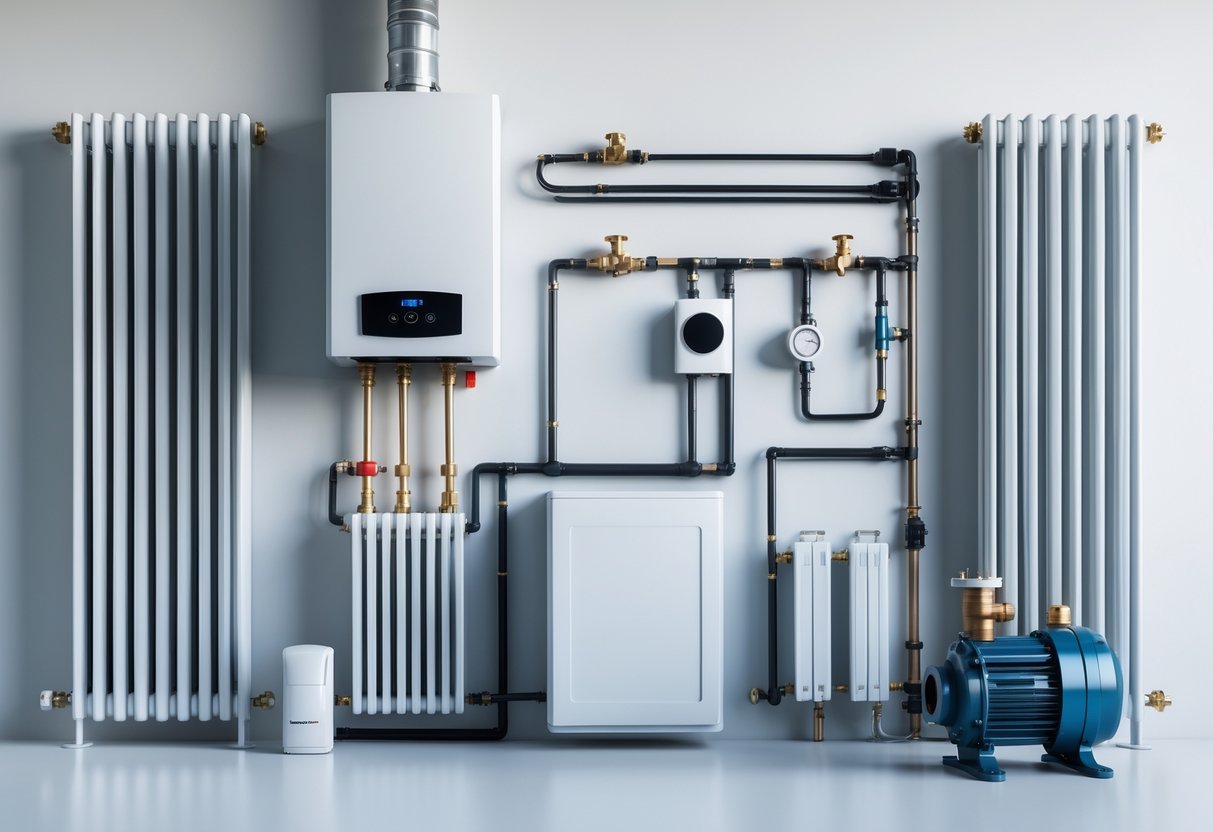
We rely on a few key parts to make a central heating system work well. Each part handles heat creation, heat transfer, delivery, and control with clear roles.
Heat Source: Boilers, Furnaces, and Heat Pumps
The heat source creates warmth for the entire system. Boilers heat water and send it through pipework to radiators or underfloor loops. They often use gas, oil, or electricity and work well in homes with radiators.
Furnaces heat air instead of water. They push warm air through ductwork and vents. Many older homes use furnaces because they pair easily with forced-air systems.
Heat pumps move heat rather than make it. They pull heat from the air or ground and raise its temperature. Heat pumps use electricity and work best in well-insulated homes.
| Type | Heats | Uses |
|---|---|---|
| Boiler | Water | Radiators, pipework |
| Furnace | Air | Ductwork |
| Heat pump | Air or water | Radiators or ducts |
Heat Exchanger Functionality
The heat exchanger transfers heat from the fuel or power source to air or water. It keeps combustion gases separate from the heating medium. This separation improves safety and efficiency.
In a boiler, the heat exchanger warms water as hot gases pass over metal surfaces. In a furnace, it heats air before the blower sends it through ductwork. In heat pumps, the heat exchanger works in pairs to move heat in and out.
Clean heat exchangers matter. Dirt or cracks reduce heat transfer and can raise energy use. Regular checks help the central heating system deliver steady heat and reduce risk.
Distribution Elements: Ductwork, Radiators, and Pipework
Distribution parts move heat to rooms. Ductwork carries warm air from a furnace or heat pump to vents. Sealed ducts reduce heat loss and keep airflow even.
Radiators release heat into rooms as hot water flows through them. They rely on convection and radiant heat. Size and placement affect comfort.
Pipework connects the boiler to radiators or other emitters. Good insulation on pipes keeps water hot along the route.
Key distribution parts:
- Ductwork for air systems
- Radiators for water-based systems
- Pipework to link all components
Control Mechanisms: Thermostats and Control Systems
Thermostats tell the system when to heat. They sense room temperature and signal the boiler, furnace, or heat pump to turn on or off. Simple thermostats use manual settings. Programmable models follow schedules.
Control systems manage how and where heat flows. Zoned control systems use valves or dampers to heat specific areas. This approach saves energy and improves comfort.
Modern control systems can link sensors, timers, and safety limits. Together, these controls keep the central heating system stable, responsive, and efficient without constant adjustment.
Understanding Heat Distribution and Regulation
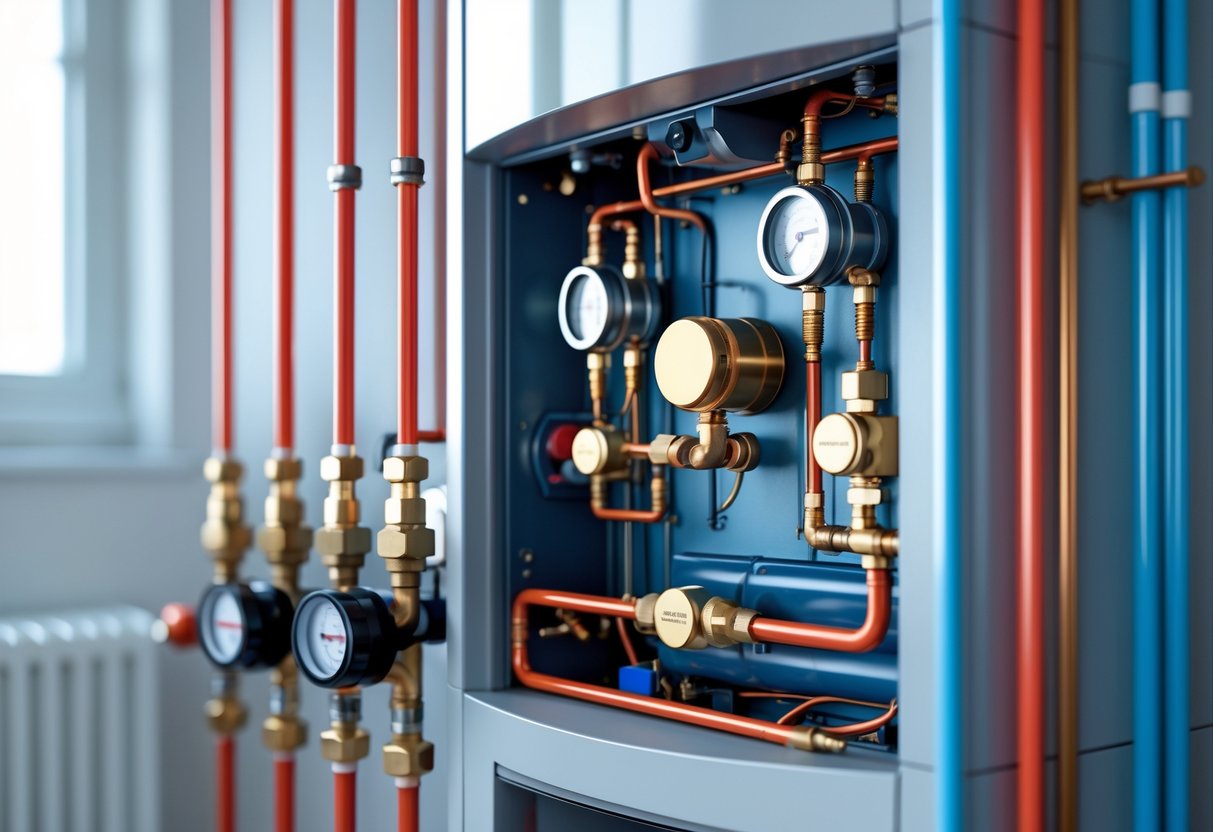
We move heat from the source to each room through a distribution system that controls flow and comfort. Air or water carries heat, while controls manage temperature regulation with clear limits and timing.
Forced Air Systems and Blower Components
Forced air systems push heated air through ducts to vents in each room. The blower drives this process. A blower motor powers the blower fan, which pulls air across the heat exchanger and sends it out.
Key parts work together:
- Return ducts bring cooler air back.
- Supply ducts deliver heated air.
- Filters keep dust out of the system.
Speed control matters. Higher fan speed moves more air but can add noise. Lower speed runs quieter and can improve comfort. Thermostats signal the blower to start and stop, which helps with steady temperature regulation. Poor duct sealing wastes heat, so tight ducts matter for even rooms and lower energy use.
Hydronic Systems and Heated Water Circulation
Hydronic systems move heated water instead of air. A boiler warms water and sends it through pipes to radiators, baseboard heaters, or underfloor heating loops. The water then returns to the boiler to reheat.
Water carries heat well. This allows smooth, even warmth with fewer drafts. Pumps control flow rate, which affects room temperature. Slower flow can raise heat transfer; faster flow spreads heat quickly.
Common heat emitters include:
- Baseboard heaters along walls for steady warmth.
- Radiators that release heat into open space.
- Underfloor heating that warms floors evenly.
Hydronic systems often run quietly. They also hold heat longer after the boiler stops, which helps keep rooms stable.
Zone Valves and Zoning for Home Comfort
Zoning splits a home into areas with separate temperature control. Each zone uses a zone valve or damper to manage flow. In forced air systems, dampers adjust airflow. In hydronic systems, zone valves control heated water to each loop.
Zoning improves comfort and efficiency. We heat only the rooms in use. Bedrooms can stay cooler while living areas stay warm.
| System Type | Control Device | What It Controls |
|---|---|---|
| Forced air | Damper | Heated air flow |
| Hydronic | Zone valve | Heated water flow |
Thermostats in each zone send clear signals. This setup reduces hot and cold spots and supports precise temperature regulation.
Control and Efficiency Features
Control systems set temperature, manage energy use, and affect indoor air quality. Insulation and ventilation also shape comfort, energy savings, and year-round climate control.
Types of Thermostats: Manual, Programmable, and Smart
Thermostats control when and how a heating system runs. Each type offers a different level of control and energy efficiency.
| Type | Key Features | Best Use |
|---|---|---|
| Manual thermostat | Hand-set temperature | Simple systems and small homes |
| Programmable thermostat | Schedules by time and day | Predictable routines |
| Smart thermostat | Learns habits, uses sensors, connects to apps | Homes with changing schedules |
A manual thermostat works but needs daily attention. A programmable thermostat cuts energy use by lowering heat at night or during work hours. A smart thermostat adjusts automatically and reports energy use. These features help reduce waste, support energy savings, and lower a home’s carbon footprint.
Energy Efficiency and Insulation
Energy efficiency depends on both the heating system and the building. Insulation keeps heat inside and reduces how often the system runs.
We focus on these insulation areas:
- Attics and roofs
- Walls and floors
- Pipes and ductwork
Good insulation supports steady indoor temperatures. It also reduces strain on boilers, furnaces, and heat pumps. When heat stays inside, the system uses less fuel or power. This leads to lower bills and fewer emissions. Efficient systems paired with proper insulation deliver reliable comfort without large swings in temperature.
Air Quality and Ventilation Considerations
Heating systems affect indoor air quality as much as they affect warmth. Dust, moisture, and stale air can build up without proper airflow.
We improve air quality by:
- Using clean filters and sealed ducts
- Adding controlled ventilation
- Managing humidity levels
Ventilation brings in fresh air while pushing out pollutants. This balance protects health and comfort during heating season. Clean air supports better breathing and reduces odors. A well-designed system maintains indoor air quality while still delivering efficient, even heat across the home.
Types of Central Heating Systems
Central heating systems differ by fuel source, equipment design, and how they deliver heat. We compare common options to help us understand how each system works and where it fits best.
Gas, Electric, and Oil Heating Systems
Gas heating remains common because it heats water fast and works well in cold weather. We often pair it with radiators or underfloor pipes. Gas systems need a mains supply and regular safety checks.
Electric heating uses electric boilers or electric central heating units. These systems suit smaller homes and places without gas. Electric boilers cost less to install but can cost more to run if power rates are high.
Oil heating serves rural homes without gas lines. It needs a storage tank and regular fuel delivery. Oil systems can produce strong heat but need more space and upkeep.
| Fuel Type | Key Benefit | Main Limitation |
|---|---|---|
| Gas | Fast heating | Needs gas line |
| Electric | Simple install | Higher running cost |
| Oil | Works off-grid | Needs fuel storage |
Combi, System, and Conventional Boilers
Combi boilers heat water on demand. We do not need a hot water tank, which saves space. These boilers work best in small to medium homes with one bathroom.
System boilers store hot water in a cylinder. They supply steady pressure to several taps at once. We often choose them for homes with higher hot water use.
Conventional boilers use a tank and a cylinder. They suit older homes with existing pipework. These systems take more space but handle large households well.
Key differences to note:
- Space needed for tanks
- Hot water demand
- Water pressure needs
Heat Pump Systems and Central Air Conditioning
Heat pump systems move heat instead of creating it. An air source heat pump pulls heat from outside air, even in cold weather. We pair it with radiators or underfloor heating for steady warmth.
These systems use electricity but run with high efficiency. They cost more to install but can lower long-term energy use. Good insulation helps them perform better.
Central air conditioning cools homes but can also heat when combined with a heat pump. An air conditioner controls indoor temperature through ducts or indoor units. We often see this setup in modern homes that need both heating and cooling from one system.
Maintenance, Safety, and Installation
We keep central heating systems reliable by focusing on upkeep, smart upgrades, proper setup, and safe operation. Clear choices in these areas protect comfort, control costs, and reduce risks.
Routine Inspections and System Upgrades
We schedule routine inspections at least once a year. A basic visit checks filters, burners, heat exchangers, vents, and controls. Clean filters improve airflow and reduce strain on the system. Technicians also test safety switches and look for leaks.
We plan maintenance tasks on a simple cycle:
- Replace filters every 1–3 months
- Clean burners and coils yearly
- Check duct seals and insulation
- Test thermostats for accuracy
We consider system upgrades when parts wear out or energy bills rise. High-efficiency units with better AFUE ratings use less fuel for the same heat. Smart thermostats and sealed ducts also cut waste. We upgrade before failures to avoid emergency costs and downtime.
Installation Considerations and Costs
We treat installation as a design task, not a quick swap. Proper sizing matters. An oversized system wastes energy, while an undersized one runs nonstop. We measure square footage, insulation, window quality, and climate.
Installation costs depend on equipment type, labor, and home layout. Duct changes raise costs, while a direct replacement costs less. Permits and disposal fees also apply.
Typical cost drivers include:
- Furnace or boiler type
- AFUE rating and features
- Ductwork condition
- Electrical or gas line updates
We compare long-term fuel savings against upfront costs. Efficient systems often cost more at first but lower monthly bills over time.
Safety Practices and Certified Technicians
We put safety first because heating systems burn fuel and move air. Poor setup or neglect can cause carbon monoxide leaks. We install CO detectors near bedrooms and the furnace. We test them twice a year.
We hire certified technicians for all service and repairs. Certification shows training in codes, combustion, and venting. Licensed pros also pull permits and follow local rules.
Key safety steps we follow:
- Keep vents clear of snow and debris
- Never block return air grilles
- Shut down systems with strange smells or sounds
- Schedule annual safety checks
We avoid DIY gas or electrical work. Trained hands reduce risk and protect our homes.
Performance Challenges and Optimization
Central heating systems face common problems that affect comfort, energy bills, and daily use. We can improve heating efficiency by fixing uneven heating, lowering waste, and choosing smart upgrades that fit our HVAC systems.
Identifying and Solving Uneven Heating
Uneven heating often shows up as cold rooms, hot spots, or slow warm-up times. These issues usually come from poor airflow, blocked vents, or unbalanced ductwork in heating and air conditioning systems. We should also check for air leaks around windows and doors.
Simple steps can fix many problems:
- Balance dampers to direct warm air where it is needed.
- Bleed radiators to remove trapped air.
- Clean or replace filters to restore airflow.
Older HVAC systems may need a professional balance test. This test measures airflow and adjusts the system to heat rooms more evenly. Fixing uneven heating improves home comfort and reduces strain on heating and cooling equipment.
Maximizing Heating Efficiency and Reducing Bills
High energy bills often point to low heating efficiency. We can start by checking thermostat settings and using a steady schedule. Large temperature swings force HVAC systems to work harder and waste energy.
Maintenance matters. Clean burners, tuned boilers, and sealed ducts reduce heat loss. Insulation also plays a key role, especially in attics and basements.
| Action | Benefit |
|---|---|
| Programmable thermostat | Cuts energy use during idle hours |
| Annual HVAC service | Keeps heating output stable |
| Duct sealing | Delivers more heat to living spaces |
Small changes add up. Better heating efficiency lowers energy bills and keeps heating and air conditioning systems running longer.
Upgrading for Improved Home Comfort
Some performance limits come from old equipment. Upgrading parts of our HVAC system can raise comfort without a full replacement. Zoned controls, for example, let us heat rooms based on use.
Modern options to consider include:
- High-efficiency boilers or furnaces
- Smart thermostats with learning features
- Variable-speed blowers
These upgrades improve control and reduce noise. They also support balanced heating and cooling across the home. When we match upgrades to our existing HVAC systems, we gain better home comfort and steadier performance without wasted energy.