Central heating works best when warm air stays inside our home. Proper insulation limits heat loss, helps our heating system run efficiently, and reduces energy use and costs. Without it, even a strong system wastes heat through walls, floors, and ceilings.
We often focus on the boiler or thermostat, but insulation plays a larger role than many expect. It controls how heat moves through the building and keeps indoor temperatures steady with less effort from the system.
We will look at how insulation affects heating performance, the main benefits it brings, and the materials that matter most. We will also cover practical ways to improve and maintain insulation for steady efficiency over time.
How Insulation Affects Central Heating Efficiency
Insulation shapes how heat moves through a home, how air escapes, and how steady indoor conditions stay. When we manage these factors well, central heating works less and delivers better comfort.
Reducing Heat Flow and Preventing Heat Loss
Insulation slows heat flow from warm indoor spaces to colder areas like attics, walls, and basements. When heat moves out more slowly, our heating system runs fewer cycles. This directly improves central heating efficiency.
We see the biggest gains in areas with large temperature gaps. Attics, exterior walls, and floors over unheated spaces matter most.
Key ways insulation helps prevent heat loss:
- Thick insulation resists heat moving through surfaces.
- Continuous coverage reduces weak spots.
- Proper installation avoids gaps and compression.
By focusing on these points, we protect heat we already paid to produce. That makes the importance of insulation clear and practical.
Minimizing Air Leaks and Air Leakage
Air leaks waste heat faster than solid surfaces. Small gaps around doors, windows, wiring, and ducts let warm air escape. Cold air then enters, forcing the heating system to work harder.
Insulation often works with air sealing to cut air leakage. Some materials, like spray foam, block both heat flow and moving air. Others pair well with sealants and barriers.
Common leak areas we address include:
- Rim joists and sill plates
- Attic hatches and recessed lights
- Duct connections and wall openings
When we reduce air leaks, indoor air stays warmer and drier. The heating system reaches set temperatures faster and holds them with less effort.
Supporting Consistent Indoor Temperatures
Insulation helps keep consistent indoor temperatures from room to room. Without it, heat escapes unevenly, causing hot and cold spots. This leads to constant thermostat changes and longer run times.
Well-insulated walls and ceilings slow heat movement in both directions. Rooms stay warmer in winter and resist sudden drops when the system turns off.
Benefits we notice include:
- Fewer temperature swings during the day
- Better comfort in rooms far from the furnace
- Steadier thermostat readings
By keeping temperatures stable, insulation supports smooth system operation. That stability protects comfort while improving central heating efficiency.
Key Benefits of Proper Insulation in Heating Systems
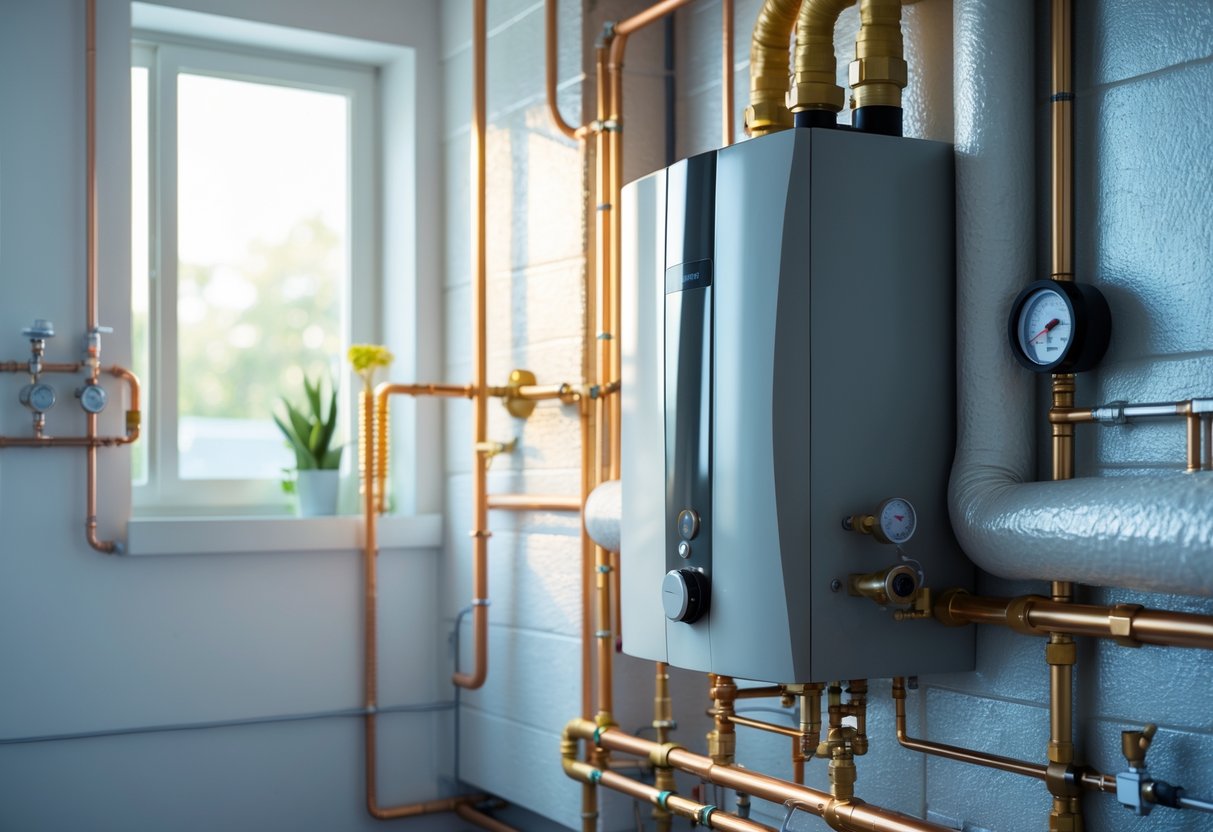
Proper insulation supports steady indoor temperatures, cuts wasted energy, and improves comfort. We see clear gains in energy savings, cleaner air, and lower impact on the environment when systems hold heat where it belongs.
Lowering Heating and Cooling Costs
Insulation slows heat loss through walls, ceilings, and ducts. We keep warm air inside during winter and block heat during summer. This control helps systems run less often and at lower power.
When heat stays put, we reduce energy bills without changing comfort. Many homes see lower energy bills because furnaces and boilers cycle less.
Common cost drivers and insulation impact
| Area insulated | Result |
|---|---|
| Attic | Cuts major heat loss |
| Ducts | Delivers heat efficiently |
| Walls | Stabilizes room temps |
Better insulation supports optimal energy efficiency by limiting waste. We spend less on fuel and avoid sudden spikes in usage.
Reducing Carbon Footprint and Energy Consumption
Insulation lowers demand on heating equipment. We reduce energy consumption because systems need fewer run times to reach set temperatures. Less run time means less fuel burned.
Using less fuel directly lowers our carbon footprint. This matters for gas, oil, and electric systems alike. Power plants and boilers produce fewer emissions when demand drops.
We also protect equipment. Fewer cycles reduce wear, which helps systems last longer. That delay cuts the need for new materials and installs.
By improving energy efficiency, insulation delivers steady energy savings year after year. The change is practical and measurable, not theoretical.
Enhancing Indoor Air Quality
Sealed and insulated spaces limit drafts and leaks. We block outdoor dust, pollen, and moisture from entering through gaps. This control supports better indoor air quality.
Proper insulation also helps manage humidity. Stable temperatures reduce condensation on walls and ducts. That lowers the risk of mold growth.
When systems run less, they stir up fewer particles. Filters last longer and work better. We breathe cleaner air with fewer swings in temperature.
Insulation pairs well with ventilation. Together, they keep air fresh while maintaining energy efficiency and comfort.
Understanding Types of Insulation Materials
Different insulation materials control heat loss in different ways. We choose based on cost, space, moisture risk, and how air moves through a home.
Fiberglass, Cellulose, and Loose-Fill Insulation
Fiberglass insulation uses fine glass fibers to slow heat flow. We often see it as fiberglass batts in walls and ceilings. Batts cost less and install fast, but gaps reduce performance.
Cellulose insulation uses recycled paper treated for fire resistance. We install it as loose-fill insulation or dense-packed into walls. It fills small spaces better than batts and limits air leaks.
Loose-fill options work well in attics and hard-to-reach areas. They settle over time, so depth matters.
Key points
- Fiberglass: low cost, common, needs careful fit
- Cellulose: better coverage, higher density
- Loose-fill: fast attic coverage, needs proper depth
Spray Foam and Rigid Foam Insulation
Spray foam insulation expands to seal cracks and joints. We use it to block air leaks and moisture movement. It costs more, but it delivers high insulation value in small spaces.
Rigid foam insulation comes in firm boards. We place it on walls, roofs, and foundations. It resists moisture and keeps steady performance over time.
Foam insulation works well where space is tight. Compared to vacuum insulation panels, rigid foam costs far less but takes more room.
Common uses
- Spray foam: rim joists, wall cavities
- Rigid foam: exterior walls, basements
Reflective Insulation and Radiant Barriers
Reflective insulation and radiant barriers reduce heat transfer by reflecting radiant heat. They use shiny surfaces, often aluminum foil.
We install radiant barriers in attics, mainly in warm climates. They cut heat gain from the roof, which lowers cooling demand.
These insulation types do not slow heat like fiberglass or foam. They work best when paired with other insulation material.
Best conditions
- Hot climates with strong sun
- Open air spaces facing the heat source
Radiant barriers need a clean air gap to perform well.
Insulation Strategies for Enhanced Heating Performance
We improve heating efficiency by placing insulation where heat loss is highest, stopping unwanted air movement, and matching materials to local climate needs. These actions show how insulation works to keep warm air inside and reduce system strain.
Prioritizing Key Areas: Attics, Walls, Floors, Ducts
We start with attic insulation because heat rises and escapes fastest at the roof. Adding proper insulation here delivers quick gains. Next, we focus on walls and floors, especially over unheated spaces like garages or crawl spaces.
Duct insulation matters when ducts run through attics or basements. Uninsulated ducts lose heat before air reaches rooms.
Key priorities:
- Attics: seal and insulate to stop major heat loss
- Exterior walls: fill cavities to slow heat transfer
- Floors: insulate above cold spaces
- Ducts: wrap to protect heated air
These steps support insulation for heating where it counts most.
Sealing Air Gaps and Preventing Thermal Bridging
We pair insulation strategies with air sealing to control air leakage. Gaps around doors, windows, wiring, and pipes let warm air escape. Caulk and weatherstripping close these paths.
Thermal bridging happens when heat moves through solid materials like studs or metal frames. We reduce it by adding continuous insulation or insulated sheathing.
Common fixes include:
- Sealing joints and penetrations
- Using foam around rim joists
- Adding continuous exterior insulation
These actions help insulation perform as designed and keep indoor temperatures stable.
Selecting the Right R-Value for Climate Zones
We choose the correct R-value based on climate zones and building parts. Higher R-values resist heat flow better, but needs vary by region.
| Area | Cold Climate | Mild Climate |
|---|---|---|
| Attic | R-49 to R-60 | R-30 to R-38 |
| Walls | R-20+ | R-13 to R-15 |
| Floors | R-30 | R-19 |
We avoid under-insulating, which wastes energy, and over-insulating, which adds cost without benefit. Matching R-value to climate ensures proper insulation and steady heating performance.
Improving and Maintaining Insulation for Long-Term Efficiency
Strong insulation keeps heat where we need it and supports steady central heating performance. Regular checks, smart upgrades, and skilled installation help protect heating efficiency, HVAC efficiency, and long-term energy use.
Inspecting and Upgrading Existing Insulation
We start by inspect insulation in key areas like attics, walls, basements, and ductwork. Gaps, compression, or moisture damage reduce heating efficiency and raise energy costs. Old materials also fail to support modern energy-efficient heating systems.
We focus on high-quality insulation with the right R-value for our climate. This choice improves insulation for heating and cooling and helps heat pumps run at stable temperatures. Better insulation supports heat pump efficiency and steady heat pump performance during cold weather.
Common signs that upgrades matter include:
- Cold floors or walls
- Uneven room temperatures
- High heating bills without higher use
Upgrading problem areas first gives faster results than full replacement.
Professional Energy Audits and Thermal Imaging
An energy audit gives us clear data on where heat escapes. Auditors test airflow, check insulation levels, and review HVAC systems. This process shows how insulation affects heating efficiency and HVAC efficiency across the home.
Thermal imaging adds visual proof. Cameras show hot and cold spots inside walls and ceilings. We use these images to target fixes instead of guessing.
Key audit tools include:
| Tool | Purpose |
|---|---|
| Blower door test | Finds air leaks |
| Thermal imaging | Shows heat loss |
| Insulation review | Checks coverage and depth |
Audit results guide smart spending and protect long-term performance.
Ensuring Quality Installation and Regular Maintenance
Good materials fail if we install them poorly. We make sure insulation fits tightly, seals edges, and stays dry. Proper installation supports energy-efficient heating and protects indoor air quality products from dust and moisture.
We schedule routine checks to catch settling, pests, or water leaks. Small repairs keep insulation working as designed and protect heat pump efficiency. Clean ducts and sealed insulation also help indoor air quality stay stable.
We rely on trained installers for complex areas like wall cavities and duct insulation. Skilled work preserves heating efficiency year after year and reduces strain on central heating systems.