Choosing between radiators and ducts shapes comfort, air quality, noise, and long-term costs in your home. We find no single winner: radiators give steady, room-by-room heat, while ducts move warm air fast and can also handle cooling. You want the system that fits how you live and what your house needs.
We look at how radiators warm surfaces and keep heat even, often with less air movement. We also examine how duct systems push air through vents, which can heat spaces quickly but may stir dust and sound.
We compare performance, comfort, and upkeep, and we weigh energy use and future impact. By the end, you can match the system to your climate, budget, and comfort goals with confidence.
Radiators in Central Heating
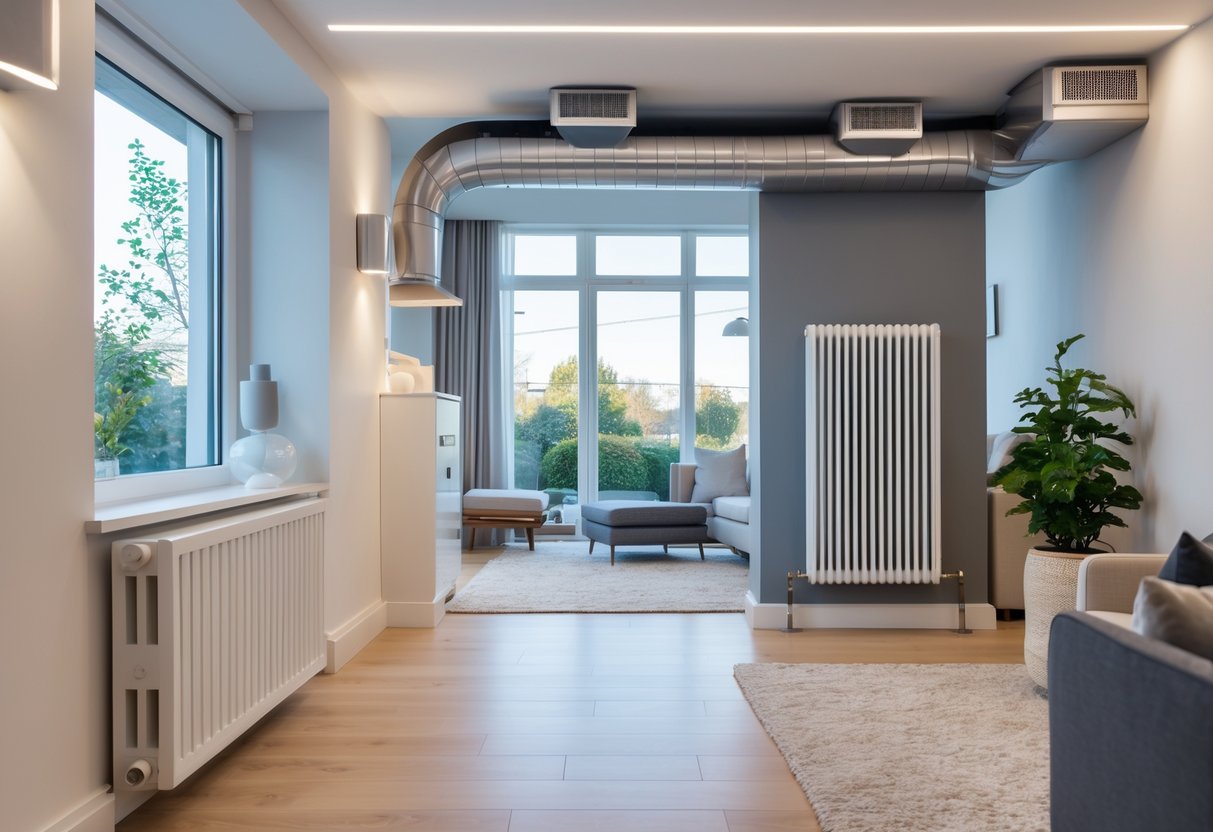
Radiators use hot water to deliver steady, radiant heat across rooms. They rely on a boiler, pipes, and careful control to support even heating and home comfort.
How Radiator Heating Systems Work
Radiator heating systems move hot water from a boiler through a network of pipes. The boiler heats water, then a pump sends it to each radiator. As the radiator warms, it releases radiant heat into the room.
Radiator heat warms objects and people directly, not just the air. This method supports consistent warmth and reduces drafts. Many central heating systems use thermostatic valves to control room temperature.
Air can collect inside radiators and reduce performance. We bleed radiators to release trapped air and restore even heating. This simple step keeps the system efficient and quiet.
Types of Radiators and Hydronic Systems
Hydronic systems use water as the heat carrier. They work with different radiator styles and layouts, depending on space and design goals.
Common radiator types include:
- Cast iron radiators: heavy, slow to heat, long-lasting warmth
- Panel radiators: slim, fast response, common in modern homes
- Baseboard radiators: low profile, run along walls
- Towel warmers: small units for bathrooms
| Feature | Cast Iron | Panel |
|---|---|---|
| Heat response | Slow | Fast |
| Heat retention | High | Moderate |
| Size | Large | Compact |
Radiator installation must match the boiler size and pipe layout. Proper sizing supports balanced heat across the central heating system.
Advantages of Radiator Heating
Radiators provide even heating with fewer temperature swings. Radiant heating feels steady and comfortable, which supports daily home comfort.
Radiator systems run quietly and avoid moving dust through ducts. This helps people sensitive to airflow. Many homes also find radiator placement flexible, especially during renovations.
Hydronic systems can pair with modern boilers and smart controls. Zoning allows us to heat rooms only when needed. This targeted control improves comfort without heating unused spaces.
Challenges of Using Radiators
Radiators need wall space, which can limit furniture placement. Older homes may require upgrades to support new radiator heating systems.
Installation costs can rise if piping needs changes. Radiator installation often involves opening walls or floors, especially in homes without existing hydronic systems.
Maintenance matters. We must bleed radiators and check valves to keep performance steady. Boilers also need regular service to protect the central heating system and ensure safe operation.
Duct-Based Central Heating Systems
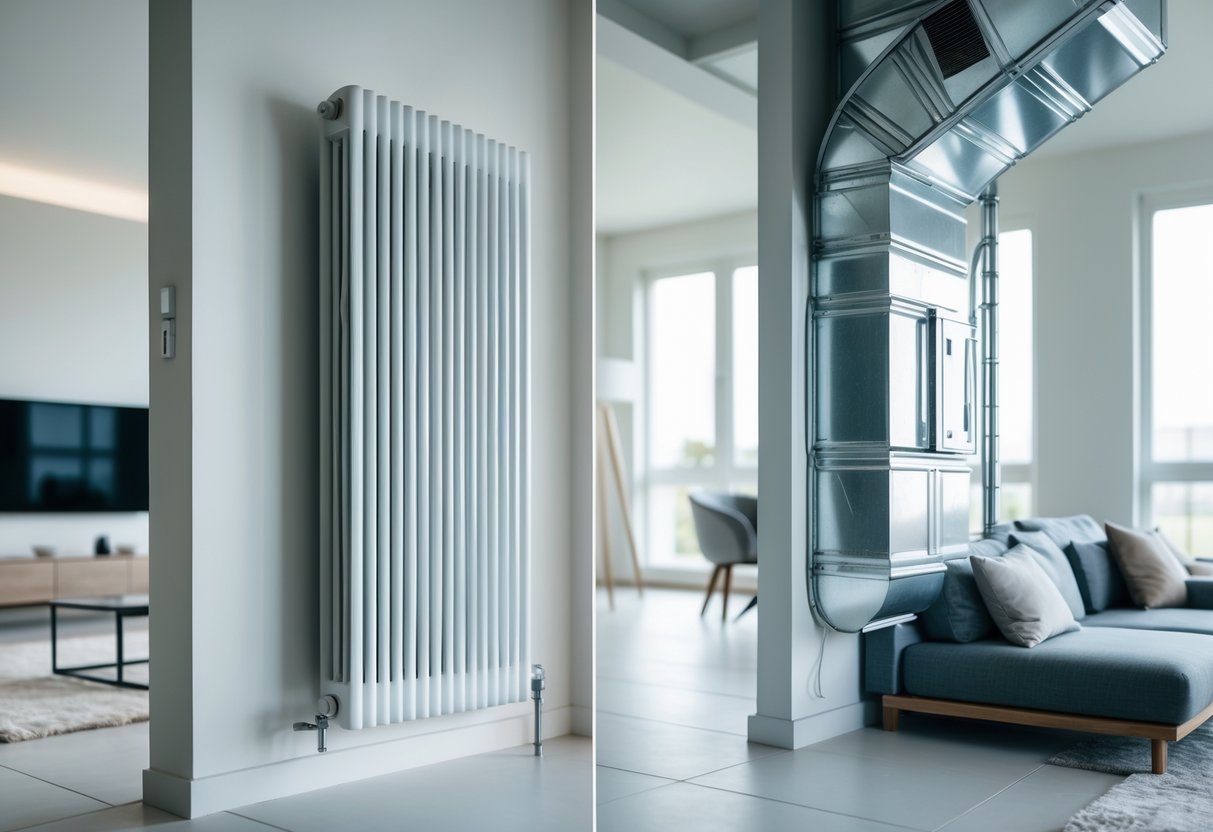
Duct-based central heat moves warm air through hidden channels in the home. These systems heat rooms fast, share parts with cooling, and rely on steady airflow and clean ducts.
How Forced Air and Ductwork Distribute Heat
A forced air system heats air at a central unit, then pushes it through ductwork to each room. The furnace or heat pump warms the air, and a blower moves it through supply ducts. Vents release warm air, while return ducts pull cooler air back.
We control heat with a thermostat that turns the system on and off. Air filters clean the air before it moves through the home. Clean filters help airflow and protect HVAC parts.
Good duct design matters. Short, sealed ducts reduce heat loss. Poor sealing can waste energy and cause uneven heating.
Types of Forced Air Systems
Forced air heating can use different heat sources. Each type fits different homes, budgets, and climates.
| System Type | Heat Source | Key Notes |
|---|---|---|
| Gas furnace | Natural gas | Common, fast heating |
| Electric furnace | Electricity | Simple, higher run cost |
| Heat pump | Electricity | Heats and cools |
| Dual-fuel | Gas + heat pump | Switches by weather |
Gas furnaces heat air quickly and work well in cold areas. Electric furnaces cost less to install but may raise bills. Heat pumps move heat instead of making it, so they pair well with central air conditioning.
Advantages of Duct-Based Heating
Forced-air systems heat homes quickly. Warm air reaches rooms in minutes, not hours. This helps during cold mornings.
We can combine heating and cooling in one system. The same ductwork serves central air conditioning, which saves space. Air filters also improve indoor air quality by trapping dust and pollen.
These systems support zoning with dampers. Zoning lets us heat areas we use most. Many homes already have ducts, which lowers upgrade costs.
Drawbacks and Issues with Ducts
Ductwork can lose heat. Leaks or poor insulation waste energy and raise bills. Homes with long or old ducts often feel uneven heat.
Forced air can move dust. Dirty ducts and air filters can spread allergens. Regular filter changes reduce this risk.
Noise can be an issue. Blowers and rushing air may sound loud near vents. Ducts also take up space in walls or ceilings, which limits design options in some homes.
Comparing Radiators and Ducts: Performance Factors
Radiators and ducts heat homes in different ways. We compare how they spread heat, affect energy use, and fit into new or existing central heating systems.
Heat Distribution and Evenness
Radiators heat rooms by warming nearby air and surfaces. This method creates steady warmth but can cause uneven heating in larger rooms. Areas near the radiator feel warmer than corners or high ceilings.
Duct systems push warm air through vents. This allows rapid heating and wider coverage across rooms. Poor duct design or leaks can lead to cold spots.
Key differences we see:
- Radiators: localized heat, slower room balance
- Ducts: faster airflow, wider reach
- Both: depend on layout, insulation, and control settings
Proper sizing and placement improve heat distribution in both home heating options.
Energy Efficiency and Heating Bills
Radiators often support high energy efficiency. They run at lower water temperatures and help prevent heat loss when pipes stay insulated. This can keep heating bills stable in many central heating systems.
Duct systems lose heat through long duct runs, especially in attics or crawl spaces. Sealing and insulating ducts reduces waste but adds cost. Air systems heat fast but may cycle more often, raising energy use.
Energy factors that matter most:
- Heat loss from pipes vs. ducts
- System age and maintenance
- Thermostat control and zoning
Both systems can perform well when designed to match the home size and use.
Installation and Retrofit Considerations
Radiators usually cost more to install in new builds due to piping. In older homes, they fit well when boilers already exist. Wall space and furniture layout also matter.
Duct systems suit new construction where builders can hide ductwork. Retrofits often raise installation costs due to wall and ceiling work. Homes without existing ducts may face major changes.
What we weigh during planning:
- Existing home heating systems
- Installation costs and labor
- Space limits and room layout
Choosing between radiators and ducts depends on the home structure and budget.
Comfort, Air Quality, and Noise Levels
Radiators and ducted systems shape how a home feels each day. They affect air quality, sound, and how steady the warmth feels in each room. We focus on clear differences that matter during daily use for heating and cooling.
Air Quality and Allergen Control
Radiators heat rooms without moving air. This limits dust movement and helps improve air quality for people with allergies. We see fewer airborne particles because the system does not rely on fans or ducts.
Ducted systems push air through vents. This can spread dust, pollen, and pet dander if filters or ducts are not clean. We must replace filters often to keep air quality steady.
Key air quality points
- Radiators: less air movement, fewer allergens
- Ducts: better control with filters, but higher upkeep
- Both systems: benefit from regular cleaning and maintenance
Radiators do not add fresh air on their own. Ducted systems can pair with air cleaners or humidity controls to support better indoor air when set up correctly.
Quiet Operation vs. Noise Levels
Radiators offer quiet operation. We usually hear only light clicks as metal warms and cools. This makes them a good fit for bedrooms, offices, and reading spaces.
Ducted systems create more noise. Fans, air rush, and vent vibration raise noise levels, especially during startup. Proper design reduces sound, but some noise remains.
| System | Common Sounds | Noise Level |
|---|---|---|
| Radiators | Soft ticking | Very low |
| Ducts | Fan and airflow | Low to moderate |
We can lower duct noise with insulated ducts and balanced airflow. Even then, radiators stay quieter during normal use.
Home Comfort and Consistent Warmth
Radiators deliver steady heat. They warm surfaces and people, not just the air. This supports stable comfort levels with fewer temperature swings.
Ducted systems heat rooms faster. Warm air spreads quickly, but rooms may cool sooner after the system shuts off. We may notice hot and cold spots if ducts are poorly placed.
Comfort differences we notice
- Radiators: even warmth, slow changes
- Ducts: fast response, less steady heat
Both systems can support good home comfort. The better choice depends on room layout, daily use, and how we value steady warmth versus quick heating and cooling.
Long-Term Considerations and Environmental Impact
We look at how radiators and ducted systems perform over time, how they affect air quality and energy use, and how easy they are to update. These points shape costs, comfort, and environmental impact for central heating systems.
Maintenance and Upkeep Requirements
Radiators need simple care. We bleed air, check valves, and watch for leaks. Ducted systems need more routine work to stay efficient.
Common maintenance tasks
| Task | Radiators | Ducts |
|---|---|---|
| Annual service | Low | Medium |
| Cleaning | Wipe surfaces | Clean ducts and vents |
| Filter changes | None | Regular |
| Leak checks | Occasional | Frequent at joints |
Duct leaks raise energy use and bills. Dust buildup can also reduce airflow. Radiant heating systems avoid filters and fans, which lowers ongoing maintenance. Installation costs differ, but upkeep often costs less for radiators over time.
Environmental and Health Implications
Radiators heat objects and people directly. This reduces air movement and limits dust spread. Many people notice fewer allergy symptoms with radiant heating systems.
Ducted systems move large volumes of air. Poor sealing can waste energy and increase emissions. Filters help, but they need regular changes to protect indoor air quality.
Energy and health notes
- Radiators pair well with boilers and heat pumps.
- Ducts can lose heat in unconditioned spaces.
- Sealed ducts reduce environmental impact.
- Low airflow lowers noise and dryness.
Both heating options can run on clean energy. System design and maintenance drive real-world results.
System Lifespan and Future Upgrades
Radiators often last 25-40 years with basic care. Pipes and panels age slowly. Upgrades focus on the heat source, not the room hardware.
Ducted systems last 20-30 years. Duct material, insulation, and sealing matter. Replacing ducts can raise installation costs during upgrades.
Upgrade flexibility
- Radiators adapt easily to new boilers or heat pumps.
- Ducts support cooling and zoning with added controls.
- Smart thermostats work with both systems.
- Home heating options expand with renewable energy.
We weigh lifespan and upgrade paths when choosing central heating systems for long-term value.