Choosing a central heating system shapes how warm your home feels, how much energy you use, and what you pay each month. We break it down so you can see what fits your space and climate.
The most common central heating systems include forced air furnaces, boilers with water-based heat, heat pumps, and electric or hybrid options. Each type heats your home in a different way, using air, water, or electricity to spread warmth.
We walk through how these systems work, where they perform best, and what to expect for comfort and upkeep. You also see newer and alternative options that may suit modern homes or energy goals.
How Central Heating Systems Work
We use central heating to warm an entire home from one main source. These systems create heat, move it through the house, and control when and where that heat flows.
Heat Generation and Distribution
Central heating starts with heat generation at one unit. Most homes use a furnace, boiler, or heat pump. A furnace burns gas or uses electricity to heat air. A boiler heats water, which then travels through pipes. Heat pumps move heat from outside to inside using electricity.
The system then handles heat distribution. Furnaces push warm air through ductwork to vents in each room. Boilers send hot water or steam to radiators or baseboards. Heat pumps use ducts or small wall units.
Each method affects comfort and efficiency. Air systems heat fast but may feel dry. Water systems heat slower but feel steady. We choose based on climate, home size, and energy costs.
Control and Zoning
A thermostat controls when the system turns on and off. We set a target temperature, and the system responds. Modern thermostats allow schedules, so heat lowers at night or when no one is home.
Some homes use zoning to control heat by area. Dampers in ductwork or valves in pipes adjust flow to each zone. This setup helps rooms heat only when needed.
Zoning improves comfort and reduces waste. Bedrooms, living areas, and basements often need different settings. Many HVAC systems support zoning with added controls and sensors.
Key Components of Central Heating
Central heating relies on several main parts that work together. Each part has a clear job.
Core components include:
- Heat source: furnace, boiler, or heat pump
- Distribution system: ductwork, pipes, or radiators
- Controls: thermostat and zone controls
- Delivery points: vents, baseboards, or radiators
In HVAC systems, fans or pumps move heat through the home. Filters keep air clean in forced-air systems. Expansion tanks and valves manage pressure in boiler systems.
We keep home heating reliable by maintaining these parts. Regular checks improve safety, comfort, and system life.
Furnace and Forced Air Systems
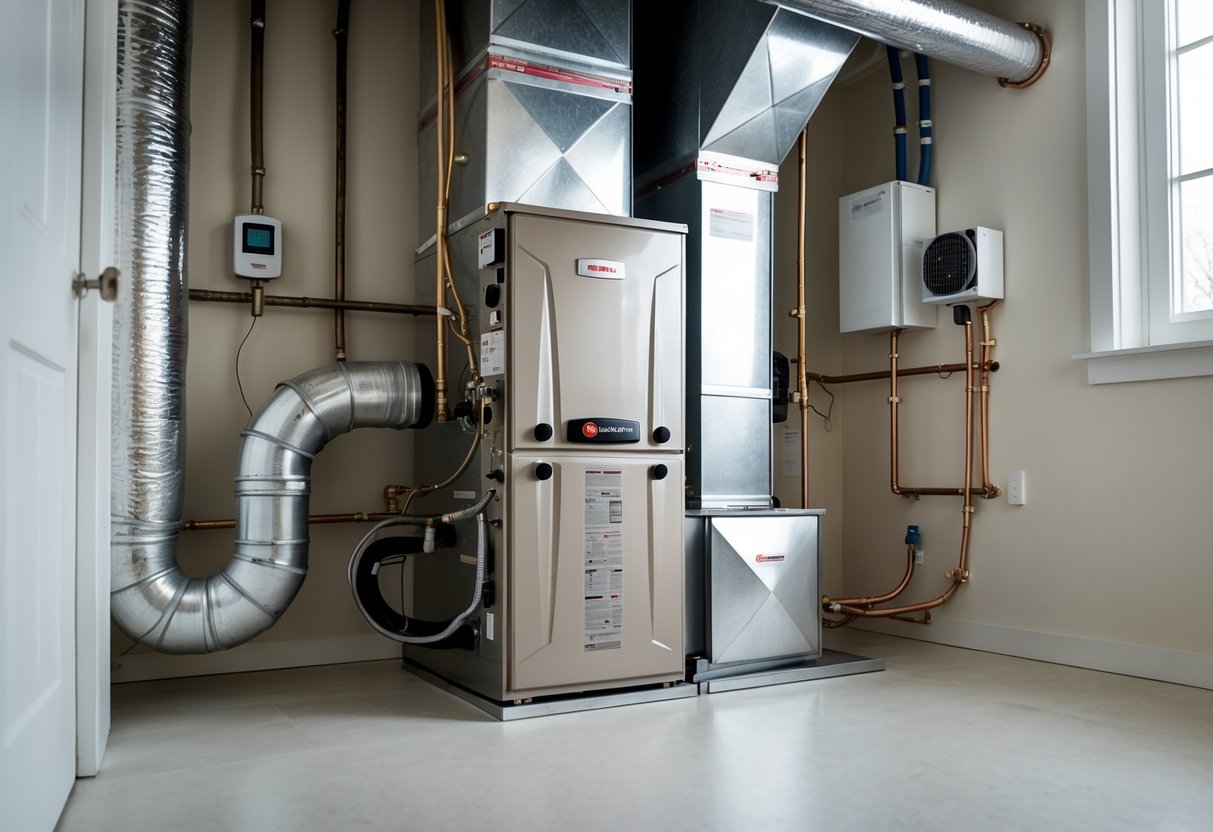
We use furnace systems to heat air and move it through ductwork to warm a building. These forced air systems heat quickly, pair well with central cooling, and come in several fuel options that affect cost, efficiency, and maintenance.
Gas Furnace Systems
A gas furnace burns natural gas or LPG to heat air in a heat exchanger. A blower then pushes warm air through ductwork as part of a forced air system. Many homes choose gas because fuel prices stay stable in many regions.
Energy efficiency matters. We check the annual fuel utilization efficiency (AFUE) rating to compare models. Modern units often reach 90-98% AFUE, which reduces fuel use. Installation cost varies by size and venting needs, but gas lines often already exist.
Gas furnaces differ from gas boilers. Boilers heat water, while furnaces heat air. Forced-air systems also support air filters and humidifiers, which improve indoor comfort.
Electric Furnace Systems
An electric furnace uses heating elements to warm air, then distributes it through forced-air systems. These furnaces have fewer moving parts and need less maintenance. They also avoid combustion gases, which simplifies installation.
Electric models convert nearly all input power to heat, so their energy efficiency is high at the unit level. Operating costs can rise where electricity rates are high. Heating installation cost stays lower because no gas lines or flues are required.
We often see electric furnaces in mild climates or smaller homes. They work well with heat pumps and fit cleanly into existing ductwork.
Oil Furnace Systems
An oil furnace burns heating oil to warm air for forced air heating. These systems deliver strong heat and perform well in cold climates. Many older homes rely on oil where gas service is limited.
Oil furnaces require a storage tank and regular maintenance. Fuel delivery and price swings affect yearly costs. AFUE ratings usually range from 80-90%, which is lower than top gas models.
Installation cost can be higher due to tanks and venting. Still, oil furnaces remain a practical choice in rural areas with established supply networks.
Warm Air Systems
Warm air systems describe any setup that heats air and moves it through ductwork. Furnaces power most warm air systems, using gas, electricity, or oil. Fans control airflow and room temperature through vents and returns.
These systems heat spaces fast and allow zoning with dampers. They also support air conditioning, making them common in full HVAC setups. We consider duct size, sealing, and layout because losses reduce energy efficiency.
Below is a quick comparison:
| Fuel Type | Typical AFUE | Installation Cost |
|---|---|---|
| Gas | 90-98% | Medium |
| Electric | ~100% | Low |
| Oil | 80-90% | High |
Boiler and Hydronic Heating Systems
Boiler and hydronic heating systems use heated water to warm a home. These systems move hot water through pipes to deliver steady, even heat with good control over comfort and energy bills.
Traditional Boiler Systems
Traditional boiler systems heat water and send it through pipes as part of wet central heating. Many homes use a gas boiler, but some boilers run on oil or electricity. The boiler sits in a utility space and connects to pumps, valves, and controls.
These boiler systems heat water, not air. That design helps rooms feel warmer at lower temperatures. The heat stays longer, which can reduce frequent cycling. Older boilers often run at lower efficiency, so they may use more fuel.
We often see traditional boilers paired with simple controls. These systems work best in homes with stable layouts and existing piping. Regular maintenance keeps them safe and reliable.
Radiator and Baseboard Heating
Radiator systems and baseboard heating deliver heat from hot water systems. Radiators release heat from metal panels or columns. Hot water baseboard units use long, low heaters along walls.
Both options connect to boiler and radiator systems. They heat rooms evenly and quietly. We can control each room with valves or thermostats.
Key differences:
| Feature | Radiators | Hot Water Baseboard |
|---|---|---|
| Heat style | Strong radiant heat | Gentle, steady heat |
| Size | Larger units | Low-profile strips |
| Response time | Slower | Faster |
Baseboard heaters fit well under windows. Radiators add warmth and visual weight. Both support hydronic heating and flexible zoning.
Condensing and High-Efficiency Boilers
A condensing boiler captures extra heat from exhaust gases. This process raises efficiency and lowers fuel use. Condensing boilers often reach much higher efficiency than older models.
These boilers work best with lower water temperatures. Radiator systems and baseboard heating can support this setup with proper design. We often pair them with smart controls for better results.
High-efficiency boilers cost more upfront. Over time, they can lower energy bills through reduced gas use. Proper installation and regular service matter for long-term performance.
Heat Pump and Hybrid Heating Systems
We use heat pump systems to move heat instead of making it from fuel. These systems support heating and cooling, use electricity, and often pair with backup heat in a hybrid heating system.
Air-Source Heat Pumps
An air-source heat pump pulls heat from outdoor air and moves it indoors. In summer, it reverses to cool the home. Modern air source heat pumps work in cold climates, but they may need supplemental heating during extreme cold.
We often see these systems replace older furnaces. They lower energy use and cut fuel costs when electricity prices stay stable. An HVAC professional sizes the system to match the home and climate.
Key points
- Uses outdoor air as the heat source
- Provides heating and cooling in one unit
- May need backup heat in very cold weather
- Works well in hybrid heating systems with a gas furnace
Ground Source Heat Pumps
A ground source heat pump uses steady ground temperatures to heat and cool. It moves heat through buried pipes called ground loops. This setup costs more upfront, but it runs very efficiently over time.
Ground source heat pumps suit homes with enough land for loops. They deliver stable performance in all seasons and need less supplemental heat. A professional HVAC technician plans the loop design and handles permits.
What to know
- Uses the ground as a heat source
- High efficiency and steady output
- Higher install cost and planning time
- Long system life with low maintenance
| Feature | Ground Source |
|---|---|
| Cold weather performance | Very strong |
| Space needed | Yard or boreholes |
| Energy source | Electricity + ground heat |
Ductless Mini-Split Systems
A ductless mini-split uses one outdoor unit and one or more indoor units. Each indoor unit heats or cools a single area. Ductless mini-splits work well for additions, older homes, or rooms without ducts.
We often install these as part of hybrid heating systems. They provide targeted comfort and reduce energy waste. Many models deliver reliable heat but may still use supplemental heat in cold snaps.
Benefits
- No ductwork needed
- Zone control by room
- Quiet operation
- Flexible placement for heating and cooling
Radiant Heating and Electric Systems
Radiant heating and electric systems deliver heat without ducts. They rely on warm surfaces or electric resistance to keep rooms at a steady temperature.
Radiant Floor Heating
Radiant floor heating warms a room from the ground up. We install heating elements or tubes under the floor to create radiant heat that rises evenly. In-floor radiant heating works well in bathrooms, kitchens, and open living areas.
This system uses either electric cables or water-filled tubes. Electric radiant floor systems heat faster and suit small spaces. Hydronic systems connect to a boiler and handle larger areas.
Key points
- Heat spreads evenly across the radiant floor
- Floors feel warm underfoot
- Works best with tile, stone, or concrete
Radiant heating reduces drafts and cold spots. It runs quietly and stays hidden, but installation costs can be high during retrofits.
Electric Central Heating
Electric central heating uses electricity as its main fuel. We often see electric furnaces or electric boilers paired with radiators or baseboards. These systems rely on electric resistance heating to produce warmth.
Electric furnaces heat air and move it through ducts. Electric boilers heat water and send it to radiators or radiant floor systems. Both options avoid gas lines and combustion.
| Feature | Electric Furnace | Electric Boiler |
|---|---|---|
| Heat delivery | Warm air | Hot water |
| Common pairing | Ducts | Radiators, floors |
| Maintenance | Low | Low |
Electric heating systems stay simple and clean. Operating costs can rise in cold climates where power rates run high.
Electric Baseboard Heaters
Electric baseboard heaters provide room-by-room control. We mount units along walls, where they heat air using electric resistance. Warm air rises, then circulates naturally.
These heaters work well as a primary system in small homes or as a supplement. Each unit runs on its own thermostat, which helps manage energy use.
What to know
- Easy to install and replace
- No ducts or boilers required
- Clear space needed along walls
Electric baseboard heaters respond quickly but cool down fast when off. Furniture placement matters to keep airflow clear and safe.
Alternative and Emerging Central Heating Options
Some homes use systems that rely on renewable fuels or shared heat networks instead of gas or oil. These options can cut fuel use, lower emissions, and work well in specific locations.
Biomass and Pellet Systems
Biomass systems burn organic fuel like wood or pellets to heat water for radiators and taps. A biomass boiler works like a gas boiler but uses pellets or wood chips. Many homes choose biomass boilers where gas service is not available.
A pellet stove or pellet stoves can heat a single space or support a full system with a water jacket. A wood stove or masonry heater stores heat and releases it slowly, which improves comfort. Some rural homes use an outdoor wood boiler to keep smoke outside.
Key points to consider
- Fuel storage: Pellets need a dry storage area.
- Maintenance: Ash removal and cleaning are regular tasks.
- Space: Equipment and storage take more room than gas systems.
Solar Heating Systems
Solar heating uses roof panels to collect heat from the sun. These panels heat water, which then supports space heating or hot water. Most solar heating systems pair with a backup boiler for cloudy days.
Solar thermal panels work best in homes with good sun exposure and insulated tanks. They reduce fuel use rather than replace it fully. Installation costs vary by roof type and system size.
| Feature | What it means |
|---|---|
| Best use | Hot water support |
| Climate fit | Sunny or mild regions |
| Backup needed | Yes, in most homes |
Solar heating can lower bills over time when used with efficient controls.
District and Community Heating
District heating supplies heat from a central plant to many buildings through insulated pipes. Homes connect through a heat exchanger instead of a boiler. The heat source can include biomass, waste heat, or combined heat and power.
This approach works well in cities, campuses, and new developments. It reduces on-site equipment and maintenance for residents. Reliability depends on the network operator and local infrastructure.
Community systems often offer stable pricing and fewer emissions per home. Access depends on location, since pipes must already be in place.